
Ìtàn Ẹ̀gbá
Our Heritage
From the courage of Lisabi to the refuge of Olumo Rock, the story of the Egba is a story of freedom, faith and coming together.
Lisabi and the fight for freedom
In the eighteenth century the Egba lived in many forest towns under the rule of the Oyo empire, whose agents demanded heavy tribute. Lisabi, remembered as the father of the Egba, turned the Aaro — a mutual-help farming society — into a movement that rose against the Oyo agents and won the Egba their freedom.
Every year Lisabi Day keeps his memory alive with drumming, masquerades and gatherings across Egbaland.
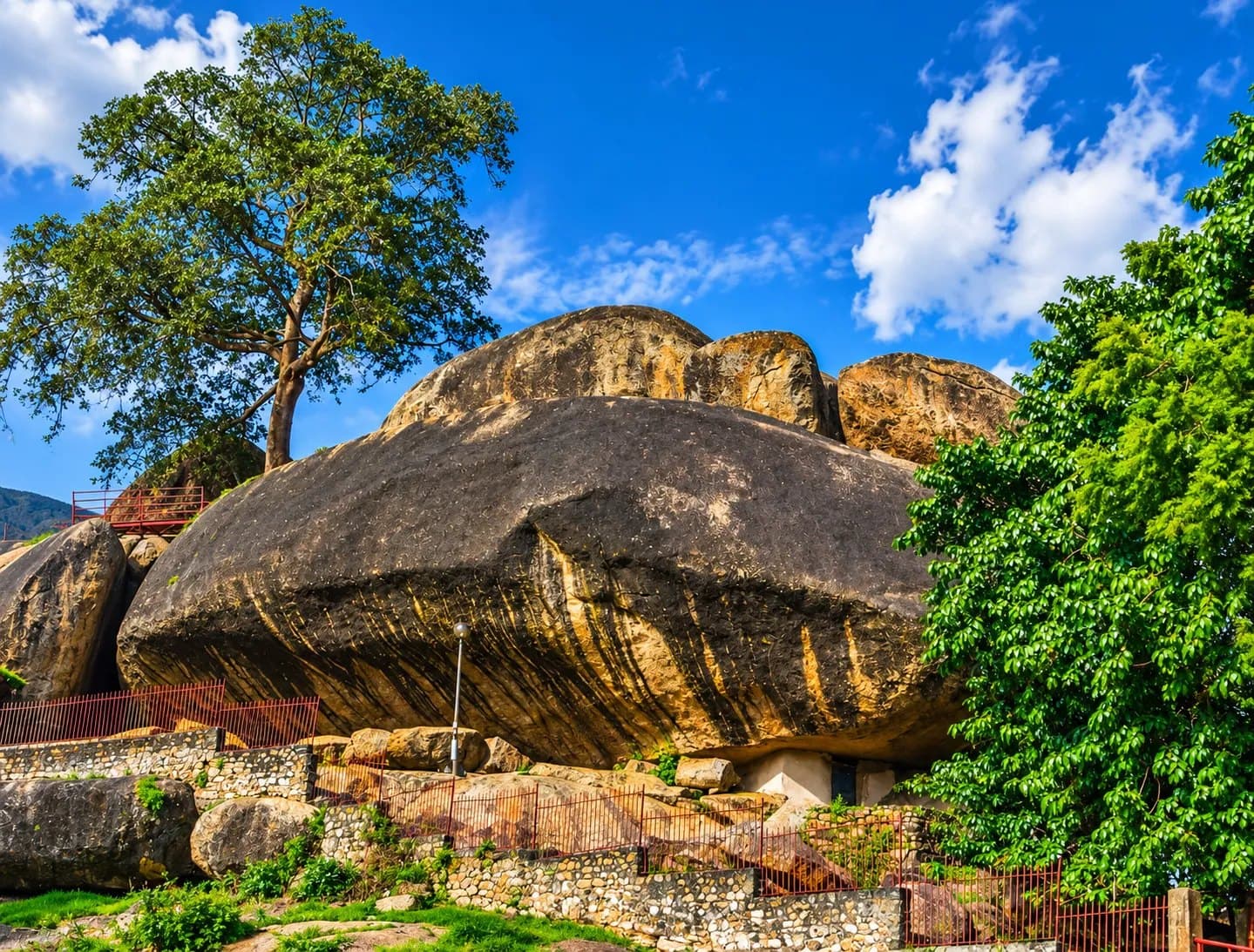
Olumo Rock and the founding of Abeokuta
In the early nineteenth century war scattered the Egba from their old towns. Around 1830, led by Sodeke, they found refuge beneath Olumo Rock and built a new home there: Abeokuta, the town “under the rock”.
Olumo Rock still stands over the city as a symbol of safety, unity and the strength of the Egba people.
Ìpín mẹ́rin
Ìpín mẹ́rin, orílẹ̀-èdè kan
Ìpín mẹ́rin ló para pọ̀ di ilẹ̀ Ẹ̀gbá, olúkúlùkù pẹ̀lú ọba tirẹ̀, lábẹ́ Aláké ilẹ̀ Ẹ̀gbá.
Egba Alake
Ake · seat of the Alake of Egbaland
The senior section, home of Ake Palace and the Alake of Egbaland, paramount ruler of all the Egba.
Egba Oke-Ona
Osile of Oke-Ona
The Oke-Ona section, led by the Osile, with its seat at Oke-Ona in Abeokuta.
Egba Gbagura
Agura of Gbagura
The Gbagura section, led by the Agura, whose people joined the settlement at Abeokuta.
Egba Owu
Olowu of Owu
The Owu section, led by the Olowu, whose people joined the Egba at Abeokuta in the 1830s.